About
Varun Singh
Digital design and design-for-test leader working on how large chips are architected, built, connected and proven correct.
I have spent a decade on the parts of a chip that no design works without: the interconnect that moves data between blocks, the infrastructure that lets a device test and repair itself, and the clocking and reset architecture that decides whether any of it reaches production and how long it lasts once it does.
I came to it through electronics and communication engineering at SRM Institute of Science and Technology, then a master’s in Electrical Engineering at theUniversity of Southern California, where digital design stopped being coursework and became the thing I wanted to do.
While still at USC I joined Luxima Technology, a startup building CMOS image sensors. It was the right kind of first job: small team, fast pace, and no distance between a design decision and its consequences. I worked on ADC and LVDS driver blocks and built an FPGA-based high-speed camera system on a Virtex-7 for automated wafer defect inspection.
Texas Instruments is where that turned into a career. I led SoC integration for silicon-proven 16nm devices and was microarchitect for clocking, debug and power on the Jacinto 7 TDA4 ADAS platform, working across the AM64x, AM62x and AM67 families. I owned the 16nm PBIST memory-test IP and architected an improved memory built-in self-repair that delivered measurable yield improvement and reduced FIT rate in production. That work became six invention families and twelve granted U.S. patents.
At Cadence I moved from building chips to building the IP other companies build chips with. I was design lead for JANUS, a packet-based, functional-safety-compliant non-coherent NoC now sold commercially, and worked on LBIST within the Modus DFT solution. I also pioneered a DFT-specific network architecture that distributes test across an SoC automatically, validated on advanced-node customer test chips down to 1.4nm.
I am now at Tenstorrent, leading the memory chiplet effort and contributing to the Grendel device programme, taking architectures from concept through to tape-out. The problems that interest me most are the ones where test, power and safety stop being separate concerns, which is increasingly where AI silicon lives.
I became a Senior Member of the IEEE in 2026, and I serve on the Technical Program Committee for DATE 2027, the Design, Automation and Test in Europe conference, on the architectural and microarchitectural design track. Reviewing other people’s work turns out to be one of the better ways to keep learning.
Away from the die
The rest of it
I build things at work and then, apparently unable to leave it there, I go home and build more things.
Woodworking
There is a table saw, a miter saw and a router in my garage, and through 2026 they have been doing an outstanding job of collecting sawdust rather than producing it. In better years they turned out a porch swing, a long run of shelves, and more cabinetry than I can reasonably justify. I would like that time back, and I intend to go and take it.
Model railroading
HO scale and G scale, with no real loyalty to either. Every year around Diwali I start laying track, and the layout grows through the season until a full scene sits beside the Christmas tree, where it stays until the new year. It is the only thing I build that I am glad to tear down and start over annually.
Running
Long distances found me after Covid, which is a common enough story. Since then: a stack of 5Ks and four half marathons, the McKinney Historic Half among them, where I took my personal best. A full marathon is on the calendar for December 2026, and an Ironman for 2027. I have now told enough people about the Ironman that backing out would be more embarrassing than training for it.
Before running, cricket
Front-order batsman and medium pacer, in roughly that order of confidence. Basketball through school and college, with rather less to show for it.
Guitar, and the truth about it
I play guitar and I sing, in that order of competence. On acoustic it is mostly desi songs and western country. On electric it is Iron Maiden, AC/DC and Bullet for My Valentine, all of which I learnt almost entirely to impress people, and all of which I would recommend to anyone with the same motive.
What I actually love is standard blues, and slow songs on the acoustic and the 12-string. Fewer notes, more room for each one to mean something. It remains the only string theory I have ever fully understood.
Hiking
Mountains and the sea. Completely cliché, completely non-negotiable.
Fixing things
I am the one who fixes things around the house, which saves a genuinely useful amount of money. The exception is the larger projects, where the saving is occasionally offset by a second line item quietly titled “damage incurred while fixing the first thing.”
Photographs
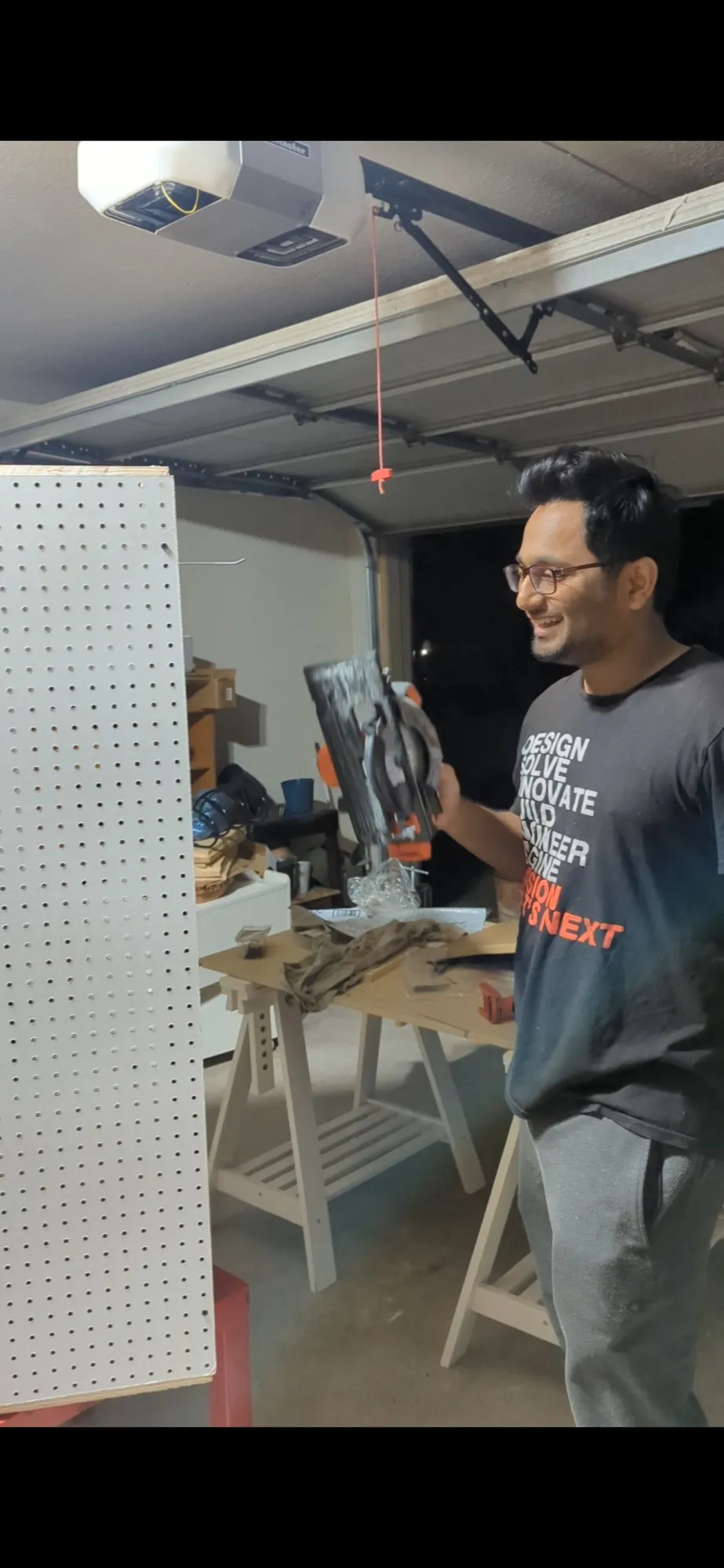
Garage shop, mid-build.Woodworking 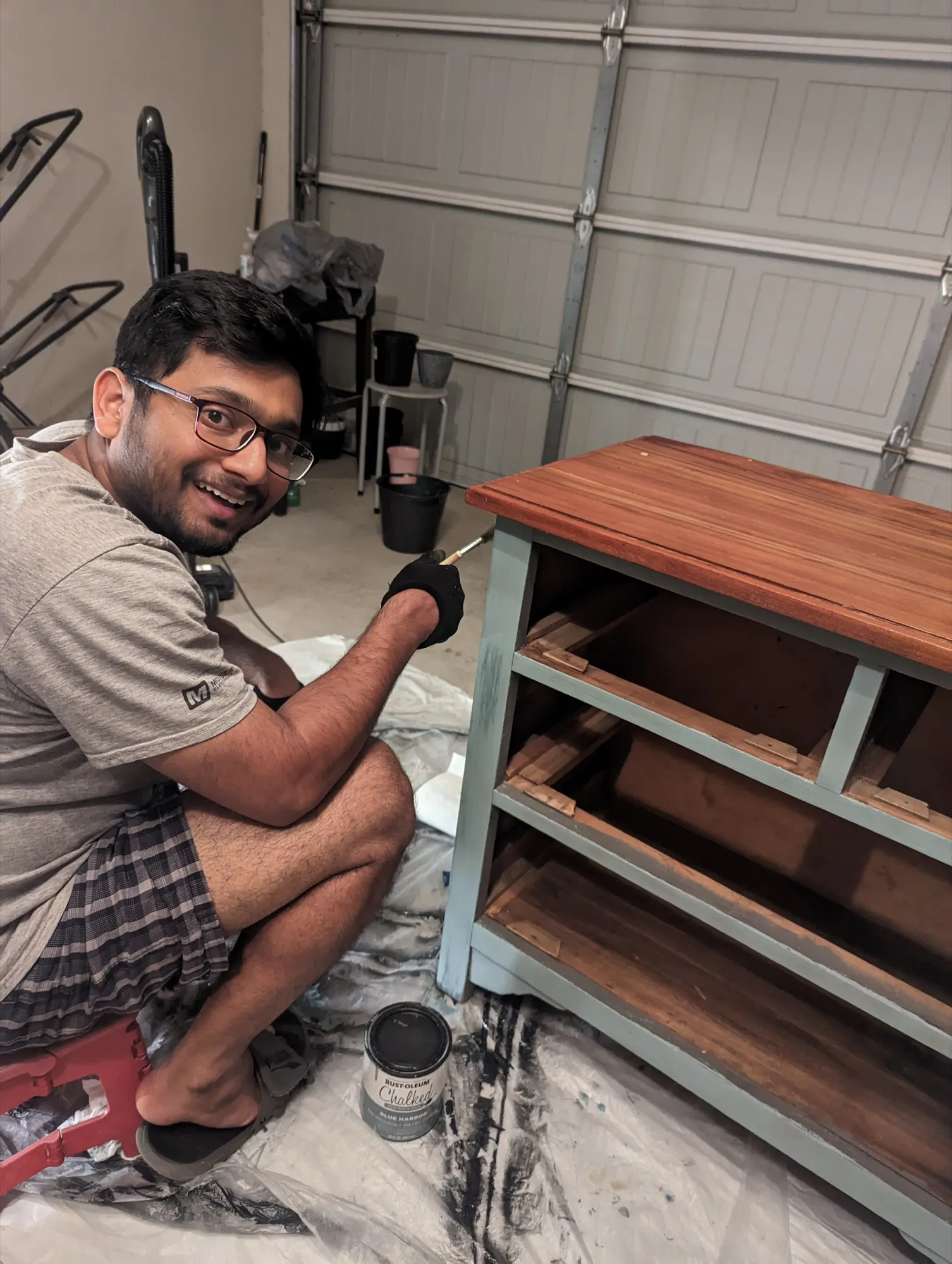
A dresser, part-way through its second life.Woodworking 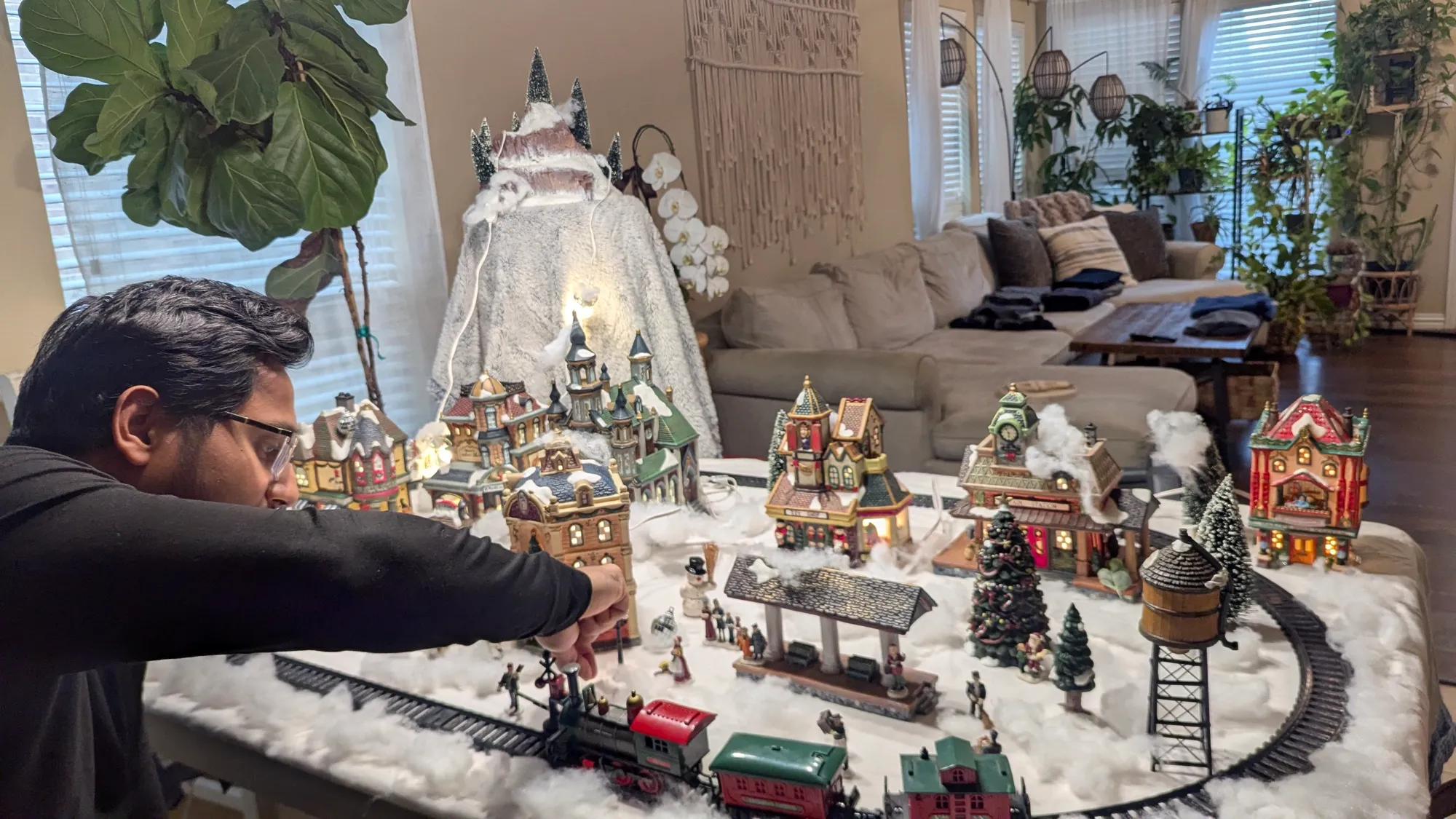
The annual layout, somewhere around December.Model railroading 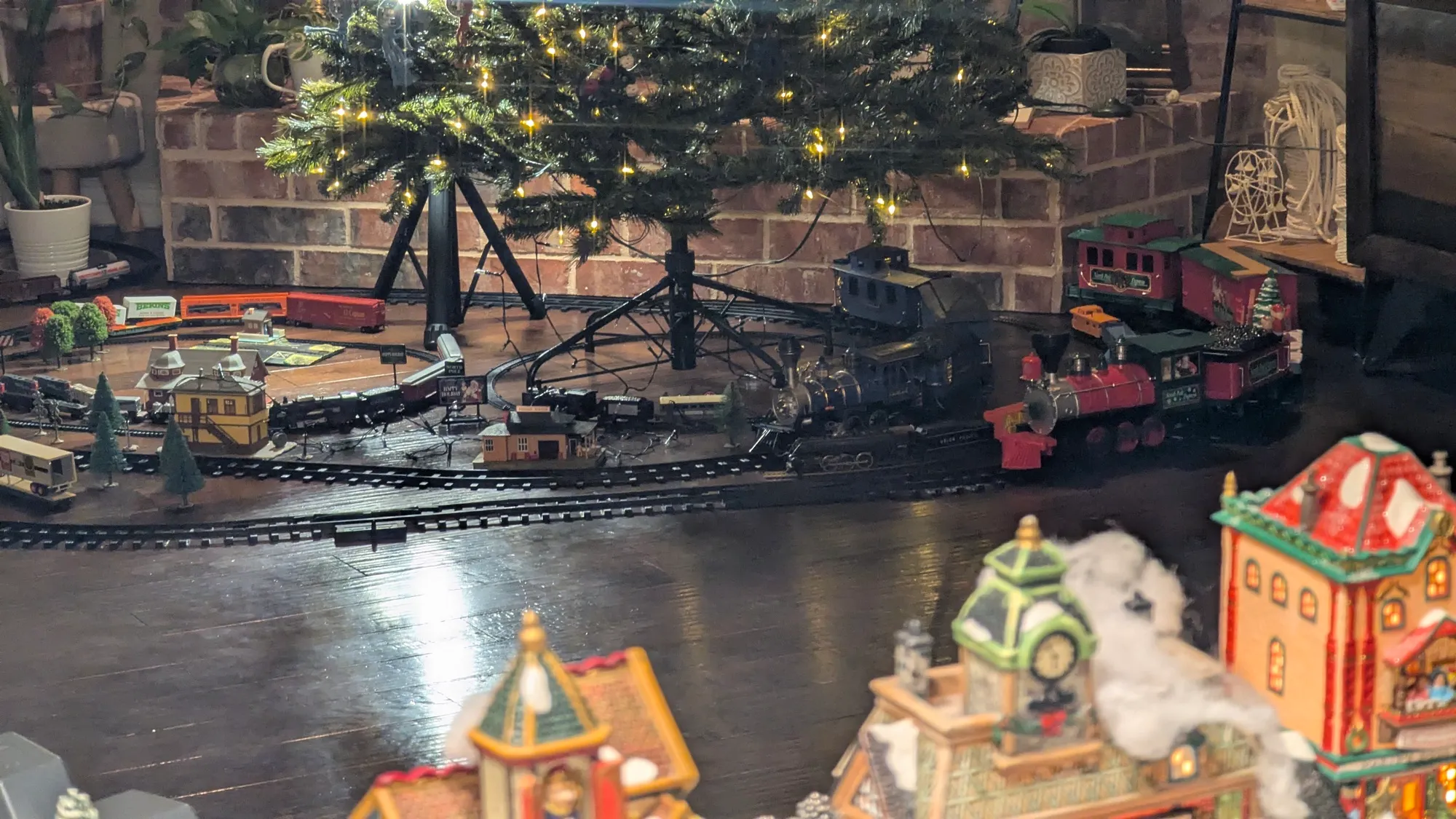
Track under the tree, where it stays until January.Model railroading 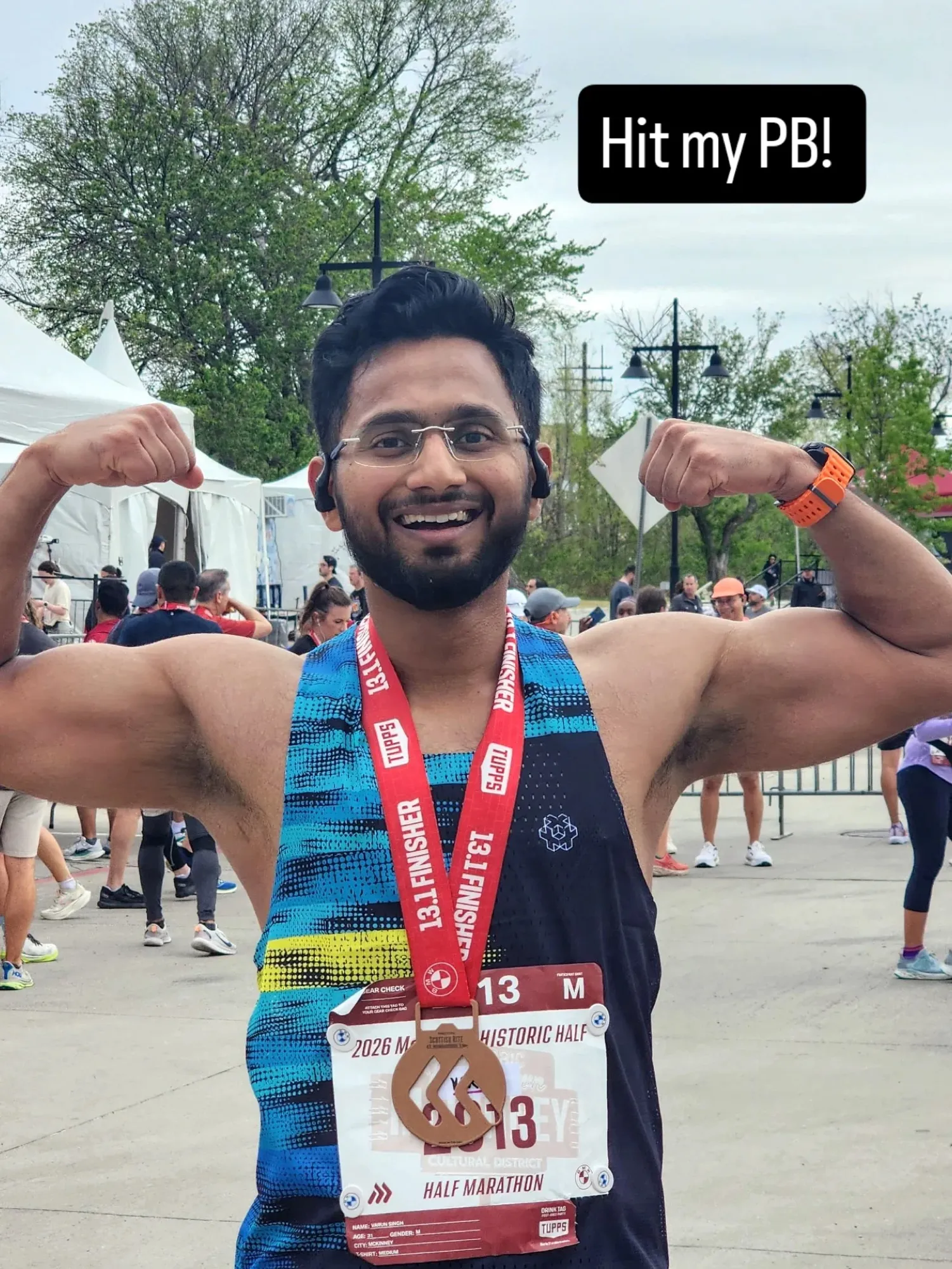
McKinney Historic Half. Personal best.Running 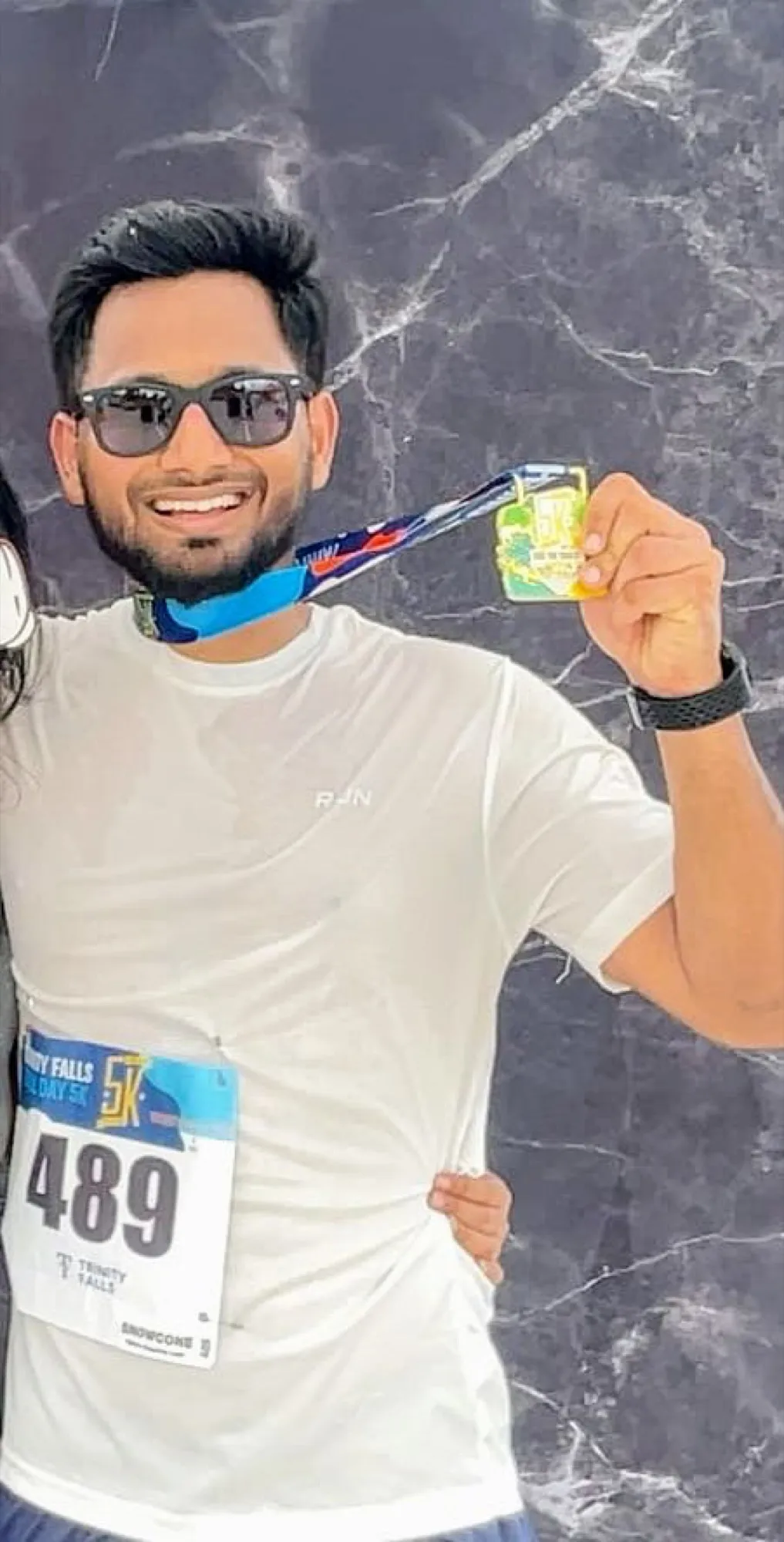
One of the 5Ks that started it.Running 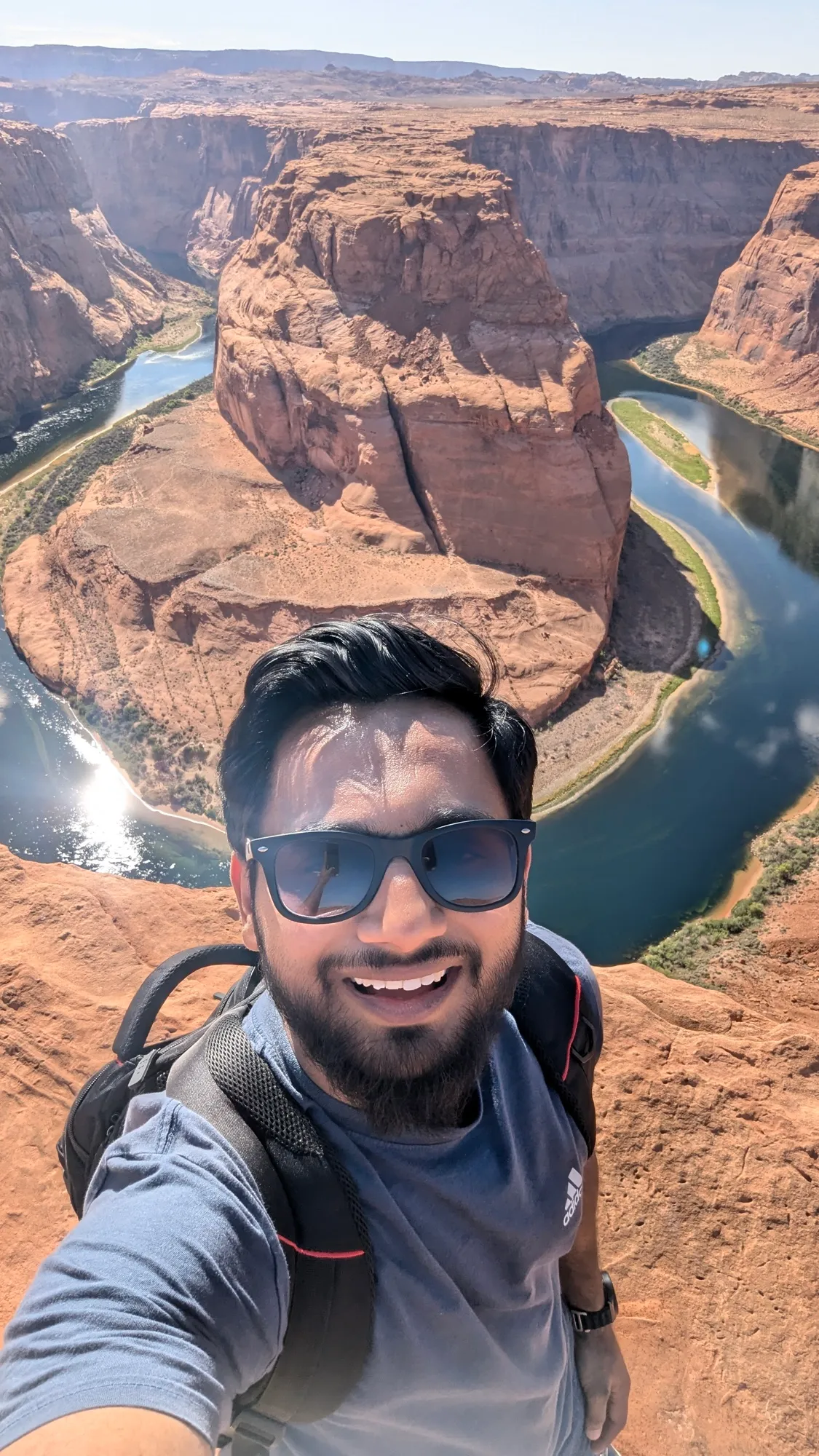
Horseshoe Bend, Arizona.Hiking 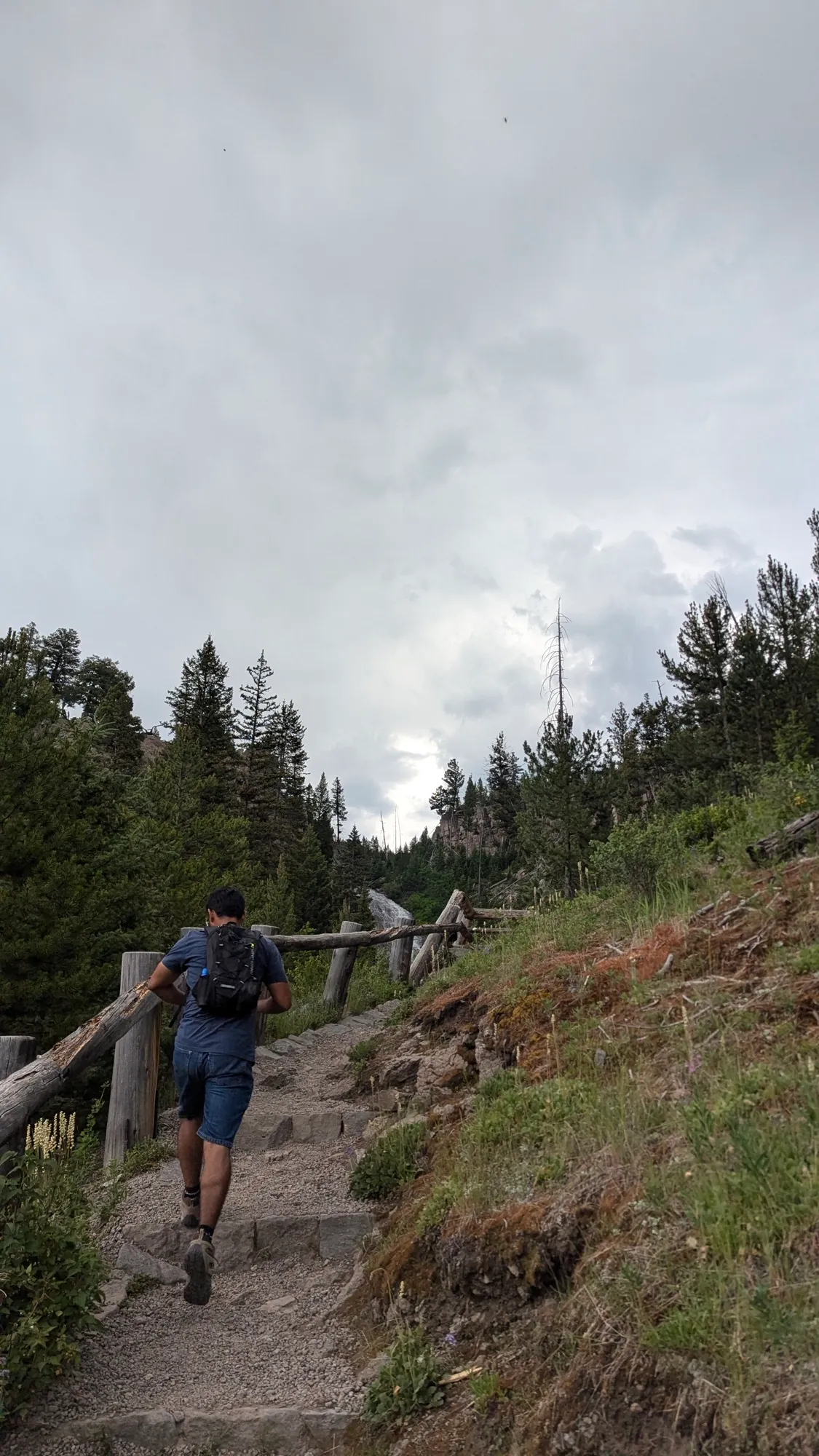
Uphill, as usual.Hiking 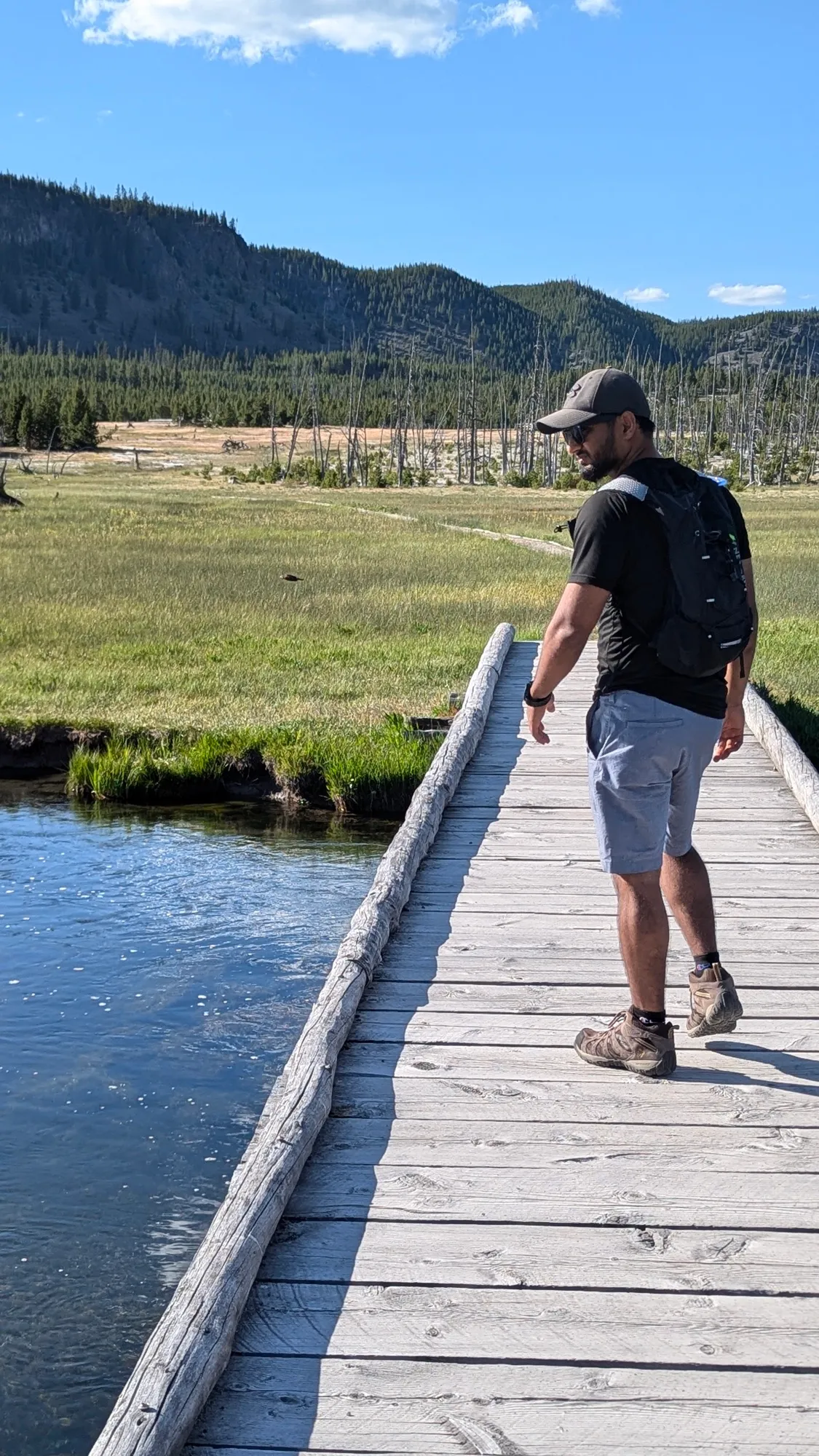
Yellowstone boardwalk.Hiking